

Polyamide Material Profile
Polyamides are among the most important engineering thermoplastics used in industrial injection molding. The material is characterized by a combination of mechanical strength, toughness, and good wear resistance. At the same time, many types of polyamide offer good resistance to oils, greases, and numerous technical media. These properties make polyamide an attractive choice for functional plastic components that are exposed to mechanical stress, friction, or fluctuating temperatures during operation.
In polyamide injection molding, the material is processed as a thermoplastic molding compound. The material is melted, injected into a mold under pressure, and removed from the mold as a finished part after cooling. The mold geometry allows for the production of complex parts with integrated functions. At the same time, the process enables reproducible mass production with consistent part quality.
A characteristic feature of polyamide is its ability to absorb moisture from the environment. This moisture absorption affects, among other things, stiffness, impact strength, and dimensional stability. A defined material condition is therefore important for the processing and evaluation of components. Technical data sheets often specify mechanical properties for both the dry and conditioned states.
PA6, PA66, and Glass-Fiber-Reinforced Variants at a Glance
Various types of materials from the polyamide family are used in injection molding. The choice depends on the mechanical requirements, the temperature load, and the desired dimensional stability of the component.
Commonly used materials include:
PA6: PA6 offers a good combination of toughness, strength, and processability. The material is frequently used for engineering components subjected to mechanical stress.
PA66: Compared to PA6, PA66 often offers higher heat resistance and greater stiffness.
PA66 GF30: In this variant, the polyamide is reinforced with approximately 30 percent glass fibers. The glass fibers increase stiffness, reduce creep, and improve the dimensional stability of components.
In addition to these standard types, there are numerous modified compounds, such as those containing glass fibers, mineral fillers, or special additives. Such material modifications make it possible to tailor properties specifically to requirements such as wear resistance, electrical properties, or temperature resistance.
Injection Molding of Polyamide
Processing polyamide in injection molding requires a carefully balanced combination of material preparation, mold design, and stable process control. Polyamide is a hygroscopic plastic. This means that the material absorbs moisture from the environment. Before injection molding, the material is therefore typically dried to ensure a defined moisture content. Excessive moisture content can lead to surface defects, reduced strength, or unstable processes during processing.
In polyamide injection molding, the granules are melted in the machine’s barrel and then injected into the mold under pressure. Once the cavity is filled, the cooling phase begins, during which the part solidifies and assumes its final shape. Temperature control, injection speed, holding pressure, and cooling must be coordinated so that the part is completely filled while minimizing warpage or internal stresses.
The optimal process windows vary depending on the type of material. In PA6 injection molding, for example, melt temperature, mold temperature, and material moisture content play a key role in determining the mechanical properties of the finished part. For glass-fiber-reinforced materials such as PA66 GF30, additional factors come into play, such as the flow behavior of the fiber-reinforced melt or the influence of fiber orientation on stiffness and part warpage.
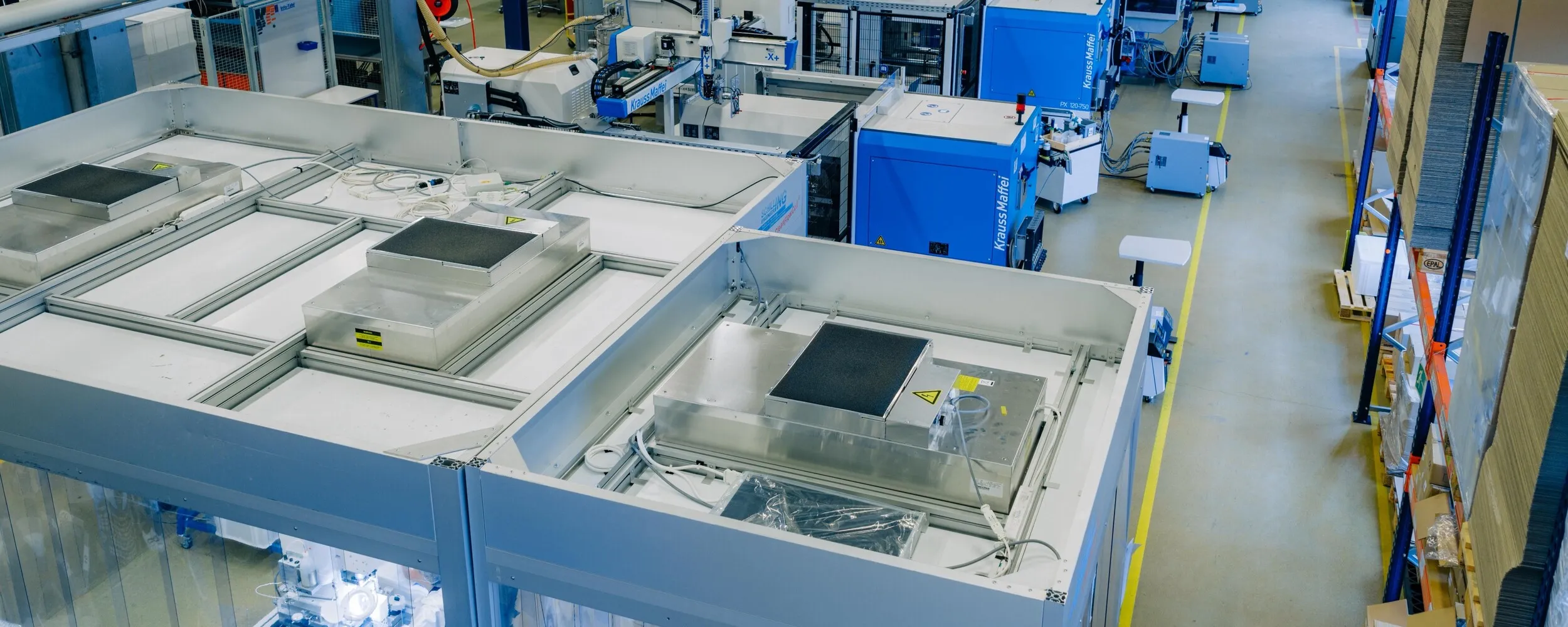
Reproducible process control is essential for stable mass production. Modern injection molding systems record and document key process parameters during production. This data forms the basis for traceable process monitoring and ensures consistent quality across large production runs. At Mythentec, production takes place on automated systems with digital process data acquisition, allowing relevant parameters to be continuously monitored during manufacturing.
Component Design for Polyamide Injection-Molded Parts
The geometry of a component influences both how it fills the mold and its subsequent dimensional stability and mechanical strength. It is therefore advisable to take into account the material-specific properties of polyamide as early as the design phase and to design the component for stable mass production.
An important factor is the design of the wall thicknesses. Uniform wall thicknesses promote consistent cooling of the material and reduce the risk of sink marks or internal stresses. In contrast, significant changes in wall thickness can lead to localized differences in shrinkage. In practice, transitions are therefore often designed with radii or gradual changes in wall thickness to ensure a consistent flow of material.
Ribs, reinforcements, and functional geometries must also be designed with the material in mind. Polyamide offers good toughness and strength; however, moisture absorption can affect its mechanical properties and dimensional stability over time. These material-specific properties are taken into account when designing functionally critical areas, such as fits or snap-fit connections.
In addition, the part geometry influences the flow behavior of the melt within the mold. In polyamide injection molding, a design-optimized geometry can help stabilize the filling process and achieve uniform material distribution. Early coordination between the design, mold concept, and injection molding process makes it easier to avoid potential risks such as warpage, air pockets, or incompletely filled areas.
If design decisions are aligned with the requirements of mass production early in the project, the need for adjustments later on can be minimized. This helps to shorten development times and supports stable production in polyamide injection molding.
Tool concept and series production capability
The design of the injection mold has a direct impact on part quality, process stability, and the cost-effectiveness of mass production. In polyamide injection molding, the mold must be designed so that the material can flow reliably into all areas of the cavity while ensuring controlled cooling of the part. A well-engineered mold design therefore forms the foundation for reproducible production.
A key element is the design of the gate system. The plastic melt enters the mold through the gate. The position, geometry, and dimensions of the gate influence the filling behavior, the pressure profile during processing, and the resulting part quality. Proper placement can help distribute the material flow evenly and reduce visible flow lines or localized stresses.
Equally important is effective mold venting. During the filling process, the air inside the mold must be able to escape. Inadequate venting can lead to air pockets, burn marks, or incompletely filled parts. Especially with engineering plastics such as polyamide, proper mold venting is an essential component of a stable process.
Gate, venting, and temperature control in polyamide
In addition to gate design and venting, mold temperature control also plays a crucial role. The temperature control system regulates the mold temperature, which in turn affects the flow behavior of the melt, the cooling rate, and surface quality. Consistent temperature control promotes controlled solidification of the material and can help reduce warpage or dimensional deviations.
In polyamide injection molding, the balance between part geometry, mold design, and process control is critical to ensuring future mass-production capability. Mold designs are therefore often engineered to enable automated production and support stable process parameters over long production runs.
Our machines cover a wide range of clamping forces and part weights and support both single- and two-component processes. Combined with digitally recorded process data, this enables the reproducible mass production of technical plastic components.
Surfaces, finishing, and assemblies
The surface quality of polyamide injection-molded parts is influenced by several factors. These include, in particular, the mold surface, the injection molding process, and the type of material used. Textured or polished mold surfaces can specifically influence the appearance of a part. At the same time, material-specific properties of the polyamide also affect the surface. With unreinforced materials, more homogeneous surfaces can generally be achieved, whereas glass-fiber-reinforced variants may exhibit a more visible fiber structure depending on the component geometry.
In addition to aesthetic requirements, the functional aspects of a surface play an important role. In technical applications, for example, the surface can influence a component’s friction characteristics, wear resistance, or assembly properties. Accordingly, the specific surface requirements relevant to each application are determined during the component design phase.
Depending on the part, additional processing steps may be required after injection molding. These include, among other things, removing gate residues, deburring, and visually inspecting the parts. In many production processes, these steps are automated or semi-automated to ensure consistent quality.
Polyamide injection-molded parts are frequently used as components in larger assemblies. They can be combined with other plastic parts, metal components, or functional elements. Typical examples include mechanical functional parts, housing elements, or components with integrated fastening structures. Early coordination between component design, the manufacturing process, and subsequent assembly facilitates the efficient implementation of such assemblies.