

Plastic injection molding for series & small series
Plastic injection molding is one of the most precise and economical processes for manufacturing technical plastic parts. At Mythentec, it is implemented in a modern, digitally controlled environment with validated processes, a wide variety of materials, and manufacturing options.
We accompany our customers along the entire value chain: from initial design consultation and tool development to assembly and packaging. Short communication channels, a high level of technical expertise, and the consistent digitalization of production processes ensure predictable results for projects of any scope.
SERVICES PROFILE
- 15 injection molding machines
- Single- and two-component technology
- Clamping force from 50t to 420t
- Part weight from 0.01 g to 1 kg
- Fully automated with 3-axis and 6-axis robots
- Digitized by Leitrechnersystem:
– IST parameter recording
– Batch tracking
– Planning and monitoring - Production in ISO 7 and ISO 8 clean rooms in accordance with EN ISO 14644
- Qualified injection molding machines and validated processes
- Processing of high-performance plastics
- Processing environmentally friendly "plastics"
- Tool storage in separate fire compartment


Material overview
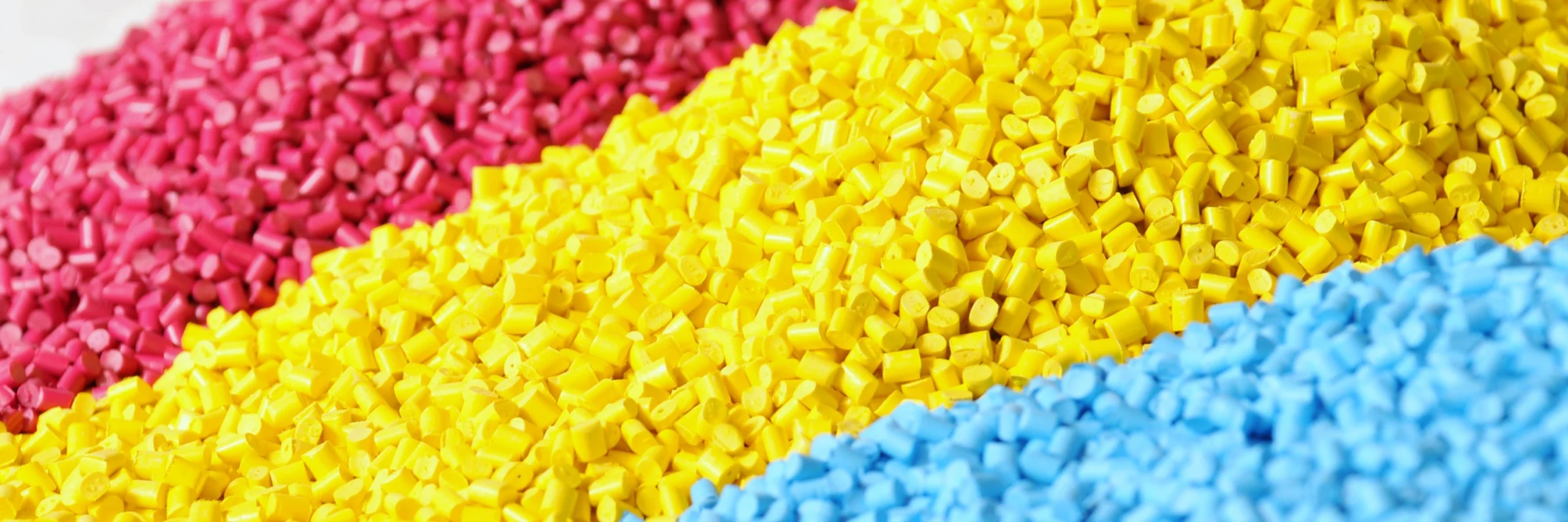
Our injection molding processes cover a wide range of plastics, from high-performance thermoplastics for demanding applications to standard materials for series components and elastic materials for seals and soft-touch surfaces:
thermoplastics
Thermoplastics can be melted, injection moldedssand and remelted if necessary. They form the basis for many technical functional components, housings, covers, and visible parts.
high-performance thermoplastics
PEEK is a high-temperature-resistant engineering plastic with very high strength and chemical resistance, which is suitable for heavily stressed components in demanding environments.
Engineering thermoplastics
Polyamide combines high strength and toughness with good abrasion and chemical resistance and is often used for stressed functional parts, bearings, and structural components.
POM is characterized by high dimensional stability, good sliding properties, and low friction, making it ideal for precision mechanical components.
Polycarbonate offers high impact resistance and transparency and is primarily used for robust visible parts, covers, and protective components.
Learn more
PET and PBT are dimensionally stable, chemical-resistant polyester plastics that are primarily used for technical components, connectors, and components in the electrical and automotive sectors.
Standard thermoplastics & polyolefins
PP is a lightweight, cost-effective standard plastic with good chemical resistance that is often used for housings, containers, and technical parts in series production.
PE is a versatile material with good impact strength and media resistance and is suitable for simple functional components, containers, and protective elements.
PS is a rigid, easy-to-process standard plastic that is mainly used for simple molded parts, disposable products, and packaging applications.
PMMA offers high transparency and a high-quality surface appearance and is often used for optical components, covers, and design components.
PETG is an impact-modified, transparent material that is easy to process and thermoform and is primarily used for clear housings, displays, and covers.
Elastomers & soft-touch materials
Elastomers complement the thermoplastics portfolio with soft, flexible materials for seals, grip areas, membranes, and functional components with defined elasticity.
TPE combine the rubber-elastic properties of classic elastomers with thermoplastic processability and are suitable for seals, soft-touch zones, and flexible connecting elements.
TPU (TPE-U) are abrasion-resistant, tough-elastic materials with good media resistance that are used for highly stressed, flexible components and functional areas.
Our expanded portfolio includes additional materials and special types, which we test on a project-specific basis and select together with you upon request.
Why Mythentec? Certified production & clean room
Mythentec combines many years of experience in plastic injection molding with clearly structured quality and hygiene management. Production is designed to manufacture sophisticated technical and medical products in a reproducible and standard-compliant manner.
The production processes are certified according to ISO 9001 (quality management) and ISO 13485 (quality management for medical devices).
Both standards require, among other things:
- Documented process control: Each production batch is linked to material, tool, and process data.
- Risk-based approach: Process risks are analyzed and minimized through preventive measures.
- Traceability: Every step of the process is clearly traceable, from the raw material to the end product.
This allows our products to be used in both industrial and regulated markets.
The combination of certified processes and modern machinery creates the basis for consistently high product quality. This is complemented by structured employee training and regular internal audits, which ensure that all processes comply with the latest standard requirements.
Production under clean room conditions in accordance with ISO 14644 (classes 7/8)
Mythentec offers the option of manufacturing plastic parts under increased cleanliness conditions that meet the requirements of classes ISO 7 and ISO 8 according to EN ISO 14644.
These environmental conditions significantly reduce the risk of particulate contamination. This is an important factor for components used in sensitive applications such as medical technology, fluid technology, and electronics. The relevant production areas are continuously monitored, qualified, and documented.
Services from the idea to the component
Mythentec provides comprehensive support for projects from the initial concept phase through to the validated series product. The focus is on close technical coordination with the customer, early consideration of manufacturing aspects, and consistent data management.
The scope of services covers all steps from design consulting and toolmaking to production, assembly, and packaging. The combination of technical experience and digital process management shortens development times and systematically minimizes sources of error.
Consulting & DFM: Wall thickness and tool-compatible design
Sound consulting during the design phase lays the foundation for a stable injection molding process. Mythentec supports customers in Design for Manufacturing (DFM) optimization to ensure the manufacturability and function of the component.
Typical areas of focus in design consulting:
- Wall thickness optimization: uniform wall thicknesses reduce stress and warping.
- Injection concepts: the position and geometry of the sprue influence filling behavior and cycle time.
- Demolding & undercuts: Design adjustments enable shorter cycle times and longer mold life.
- Material selection: Material recommendations based on mechanical, thermal, and chemical requirements.
Early involvement in the development phase enables component and tool concepts to be optimally coordinated with each other.
Toolmaking/industrialization: validated series production start-up
Precise injection molds designed for durability and reproducibility are created in the tool shop. Mythentec also handles industrialization, i.e., the systematic transition from prototype to series tool.
These include:
- Tool simulations (filling behavior, cooling, shrinkage) for process validation,
- Sampling and validation according to customer-specific specifications,
- Tool maintenance and servicing throughout the entire life cycle.
The combination of simulation, practical experience, and precise measurement technology ensures that series production achieves stable quality values right from the first shot.
Processes & technologies in plastic injection molding
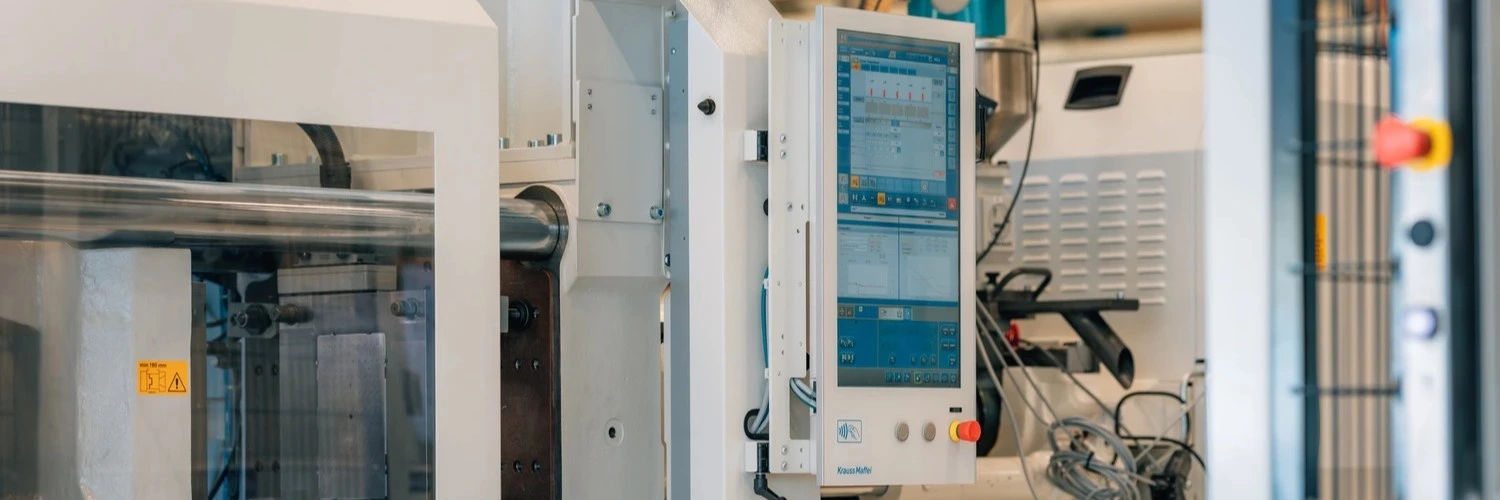
Mythentec uses state-of-the-art processes and machines to produce components with high dimensional accuracy and process stability. We have 15 injection molding machines with clamping forces ranging from 50 to 420 tons. This allows us to manufacture both delicate microcomponents and robust functional elements.
All production systems are networked via a host computer system that records and analyzes process parameters in real time. This allows temperature, pressure, cycle time, and injection speed to be precisely controlled and documented.
Plastic injection molding process: cycle, temperature control, cooling
In plastic injection molding, a molten plastic mass is injected into a precisely temperature-controlled mold, where it solidifies under pressure. The cooling phase is one of the most crucial steps in the process, as it has a significant impact on the cycle time and dimensional accuracy.
Mythentec optimizes the injection molding cycle by:
- Tool temperature control with high control accuracy to achieve uniform surfaces and minimal distortion.
- Cooling channel concepts that are individually designed for each material.
- Data-supported monitoring of process parameters to detect deviations at an early stage.
This achieves an optimal balance between efficiency and precision.
1K and 2K injection molding, inserts, deburring & peripherals
In addition to classic 1K processes, Mythentec also offers 2K injection molding (two-component injection molding). This involves combining two different materials or colors in a single process (for example, for multi-component seals, visible parts, or haptic functional surfaces).
Other technical options include:
- Inserts (e.g., metal inserts) for functional enhancement,
- Deburring and post-processing using automated systems,
- Conditioning for optimal material properties,
- Integration of sensors or markings during production.
These processes allow for a high degree of design freedom and reduce assembly costs, as multiple functions can be integrated directly into the component.
Automated cells with 3/6-axis robots
Our production cells are fully automated and equipped with 3- or 6-axis robots. This ensures that insertion, removal, and handling processes are carried out precisely and reproducibly.
Automation offers several advantages:
- Constant cycle times and reduced operator dependency,
- Higher process reliability through standardized motion sequences,
- Integrated quality controls directly in the production cell,
- Seamless traceability through real-time data acquisition in the ERP system.
This allows even complex components to be manufactured economically, under consistent conditions throughout the entire production period and in series.
Materials & Fields of Application
Choosing the right plastic is crucial for the function, service life, and cost-effectiveness of a component. Mythentec processes a wide range of technical and high-performance plastics.
Precise process control and optimized mold temperature control enable even demanding materials to be processed reliably. This ensures stable results with tight tolerances, minimal warping, and consistent surface quality for both prototypes and series production.
High-performance plastics (e.g., PEEK, PEI, PPS, LCP)
Mythentec uses high-performance plastics for components that are exposed to high temperatures, media, or mechanical stress. Typical materials include:
- PEEK (polyetheretherketone): very high temperature resistance (up to approx. 250 °C), chemically resistant, mechanically resilient.
- PEI / Ultem: dimensionally stable, good electrical insulation properties.
- PPS (polyphenylene sulfide): high rigidity and low moisture absorption.
- LCP (liquid crystal polymer): excellent flowability and dimensional stability, ideal for miniature components.
These materials are often used in medical technology, electrical engineering, fluid technology, and precision mechanical applications, where classic standard plastics reach their limits.
Thermally conductive plastics for injection molding
In addition to electrically insulating plastics, Mythentec also processes thermally conductive polymers that enable efficient heat dissipation in components. They contain special fillers—such as graphite, aluminum oxide, or boron nitride—and combine the processability of thermoplastics with significantly increased thermal conductivity.
Advantages of this material class:
- Improved heat dissipation, e.g., for LED housings, sensor components, or cooling structures,
- Weight savings compared to aluminum or metal parts,
- Corrosion resistance and electrical insulation in a single component.
Thermally conductive plastics thus open up new design possibilities in areas where thermal management and electrical separation are required at the same time.
Assembly, finishing, and labeling
In addition to pure component manufacturing, Mythentec offers a wide range of further processing and finishing processes that enable efficient integration into downstream value chains. Plastic parts can be delivered ready for assembly, functionally tested, and, if desired, packaged under clean conditions.
(Semi-)automatic assembly, ultrasonic welding
Mythentec assembles individual components into functional assemblies, either manually or (semi-)automatically. Precise joining processes are used to create permanently tight and mechanically resilient connections.
Important processes:
- Ultrasonic welding: locally limited energy input for form-fit and material-fit connections, especially for medical technology or fluid-carrying components.
- Press-fitting and joining of inserts: integration of metallic or hybrid functional elements.
- Automated assembly processes: use of robotics and sensor technology for cycle time optimization.
These solutions ensure reproducible quality while maintaining high cost-effectiveness.
Laser marking, packaging (including cleanliness requirements)
Mythentec uses laser marking systems for the unique identification of parts and assemblies. This allows batch numbers, data matrix codes, or customized logos to be applied in an abrasion-resistant and traceable manner, even on sensitive or structured surfaces.
In addition, Mythentec offers:
- Customized packaging solutions,
- Packaging in accordance with ISO 7/8 requirements,
- Air-conditioned temporary storage and conditioning, if required.
These integrated processes ensure that every product is delivered in perfect condition and in accordance with the defined quality parameters.
Quality & Validation
All processes are monitored, documented, and regularly validated using data. The aim is to ensure consistently high product quality regardless of material, component size, or production volume.
Through the use of precise measurement technology, structured test plans, and fully digitized data collection, Mythentec can identify and correct quality deviations at an early stage.
Process Capabilities, Test Planning, Initial Sampling
Process capabilities (e.g., Cp, Cpk) are determined during the industrialization phase to ensure reproducibility. Quality assurance includes:
- Initial sampling according to customer-specific standards (e.g., VDA or PPAP),
- Test planning and test equipment capability analyses,
- Tool and machine approvals based on valid process data.
This procedure ensures that all series parameters are defined, documented, and auditable.
Collaboration & Offer
Every injection molding project requires precise coordination between the customer, design, and manufacturing teams. Mythentec therefore places particular emphasis on structured, transparent, and collaborative cooperation. Communication usually begins in the early concept phase in order to optimally coordinate all requirements in terms of function, materials, and process environment.
Customers benefit from clearly defined processes, short decision-making paths, and a dedicated contact person throughout all project phases—from the initial inquiry to series approval.
Procedure, required data & fast project initiation
In order for a project to be launched efficiently, some basic technical information is required. This usually includes:
3D data (e.g., STEP, IGES) and 2D drawings with tolerances,
Information on material requirements, component function, and operating conditions,
Desired lot sizes, purchase quantities, and quality requirements,
Any standards or industry specifications (e.g., medical technology, electronics).
Once the data has been received, a feasibility assessment is carried out. Based on this, Mythentec prepares a quote that clearly shows the tooling, manufacturing, and quality assurance costs. Upon request, sample parts and sampling reports can be provided before series production is approved.